

When the sea loses its forest
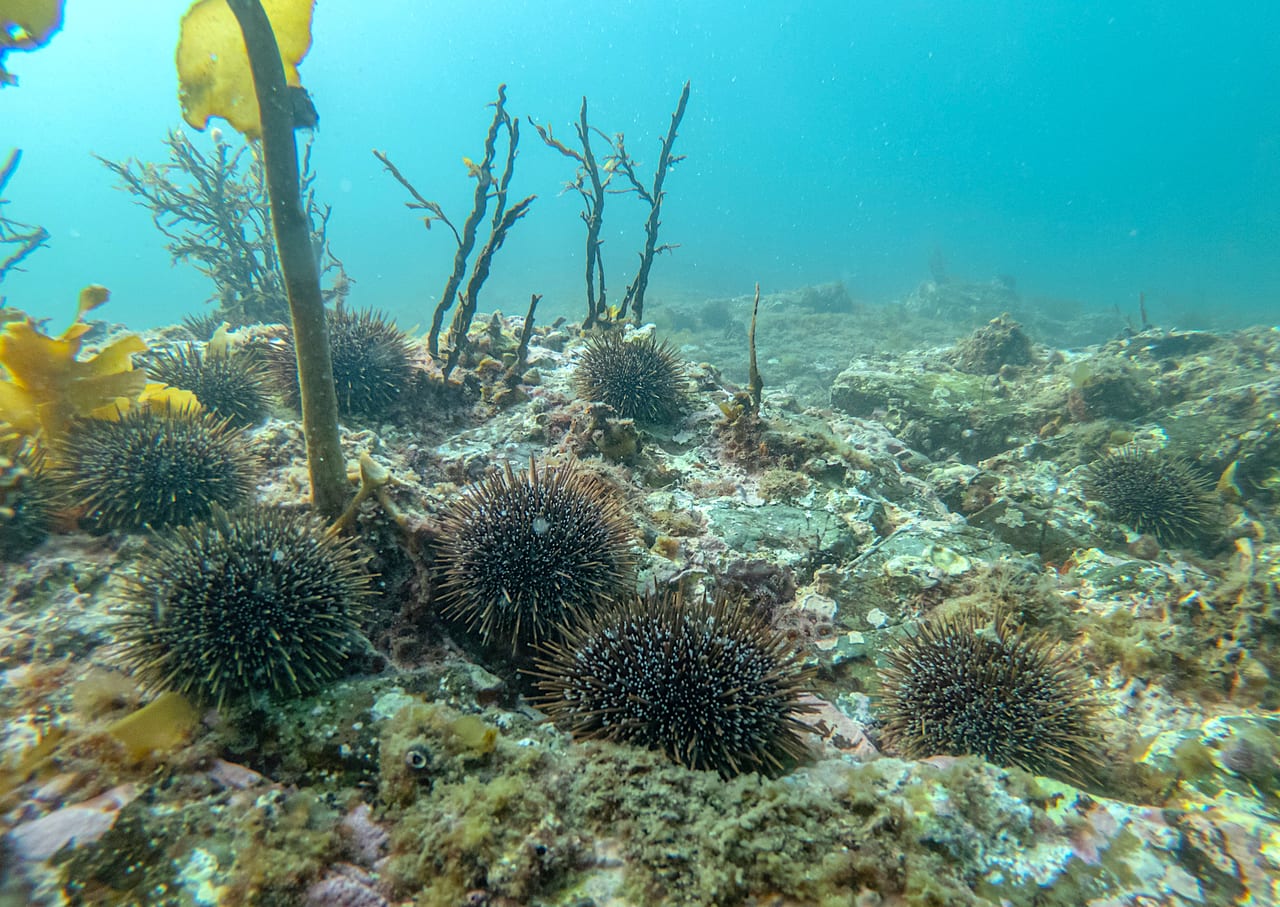
Beneath the surface along the Norwegian coast, a quiet change is under way. Kelp forests are disappearing. Eelgrass meadows are weakening. Fjords that have given us food, light, recreation and life for generations are losing some of what keeps them alive. Terralgea lives off cultivated algae. That is why we also have to look at how the same knowledge can be used to give something back.
It is easy to believe the sea can take anything.
It lies there, vast and dark, and looks much the same from land. We see the waves, smell the salt, swim from the rocks, put out the boat, fish from the jetty and call it nature. But much of what decides whether a stretch of coast is healthy happens below the surface. Down there are forests we rarely see. They do not grow on rock or soil, but in current, salt and light.
Kelp. Eelgrass. Wrack. Algae. Blue forest.
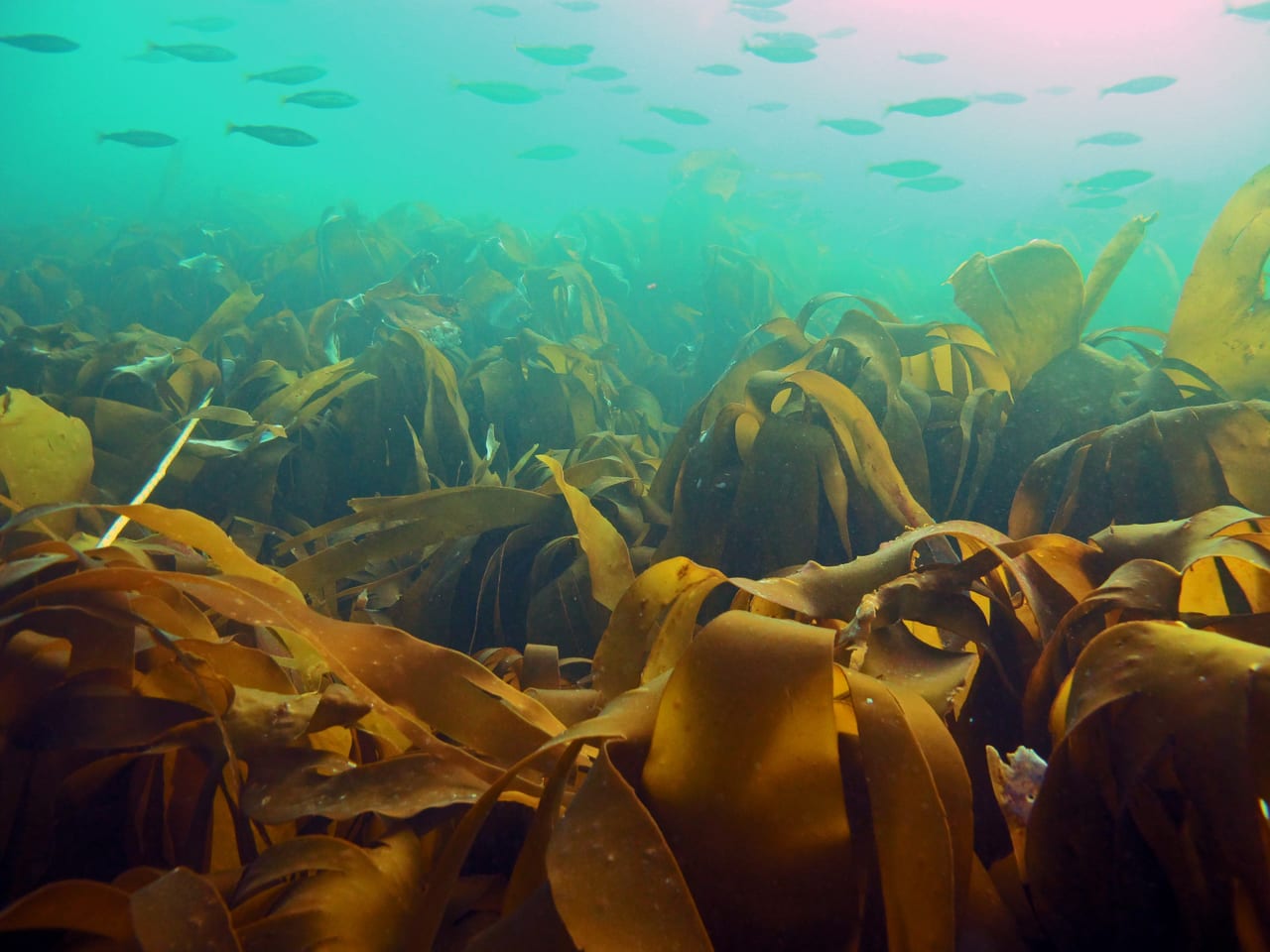

This is not decoration in the sea. It is structure. It is shelter, food, oxygen, carbon storage, water cleaning and habitat. It is the basis for small animals, shellfish, fish, seabirds and whole food chains. The Institute of Marine Research describes kelp forest as a habitat with high biological diversity, where thousands of small animals can live on a single plant, and where the forests serve as important feeding and nursery grounds for fish.
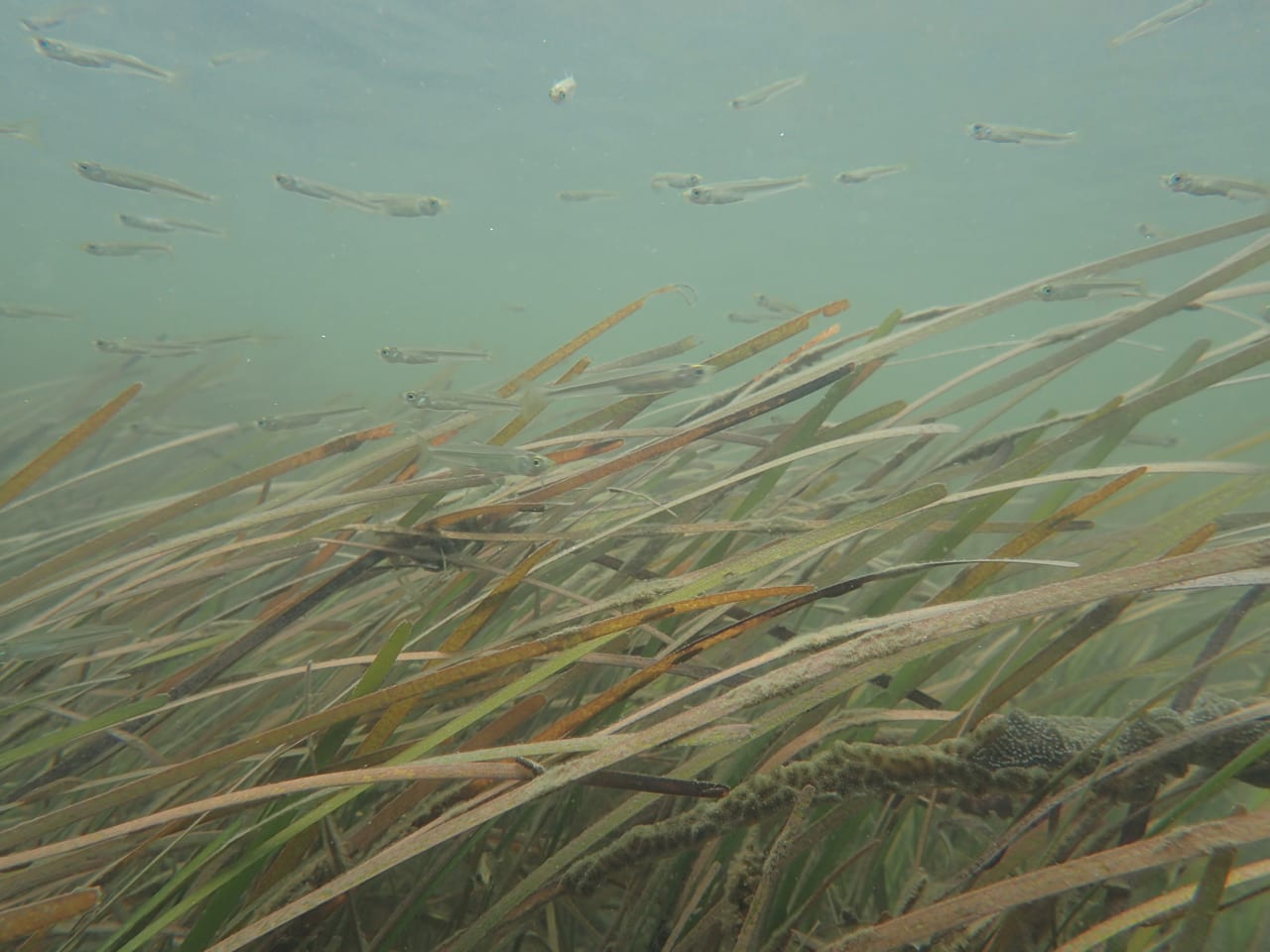
When this structure disappears, it is not just one species that goes. A whole room for life goes with it.
The numbers are serious
Along the Norwegian coast, the loss is already large.
In the Skagerrak, around 80 percent of the sugar kelp forest is gone. In the North Sea, around 40 percent has disappeared. NIVA (in Norwegian) points to several drivers behind the decline in southern Norway: higher sea temperatures, more nutrients, overgrowth of filamentous algae, run-off from land, sewage, and food chains weakened by long pressure on predator fish such as cod.
Further north, sea urchins have grazed down vast areas of kelp forest. The Institute of Marine Research (in Norwegian) estimates that around 5,000 square kilometres of kelp forest is gone in northern Norway. That is nearly twice the size of Luxembourg. The same report estimates that the ecosystem services from Norwegian kelp forest are worth around 6.9 billion kroner a year, and that the gain from restoring lost kelp forest in Norway could amount to 160 billion kroner over a thirty-year period.
The numbers are large. But kroner tell only part of the story.
For most of us, the sea is also something more concrete: a place we grew up with. A fjord we have swum in. An islet we have rowed out to. The fish that used to hold under the jetty. The crabs the children searched for in the shallows. The smell of seaweed when the water draws back.
When the sea weakens, we lose more than nature. We lose connection.
The Oslofjord shows what is at stake
The Oslofjord is perhaps the clearest example of how serious things can get when many pressures act at once.
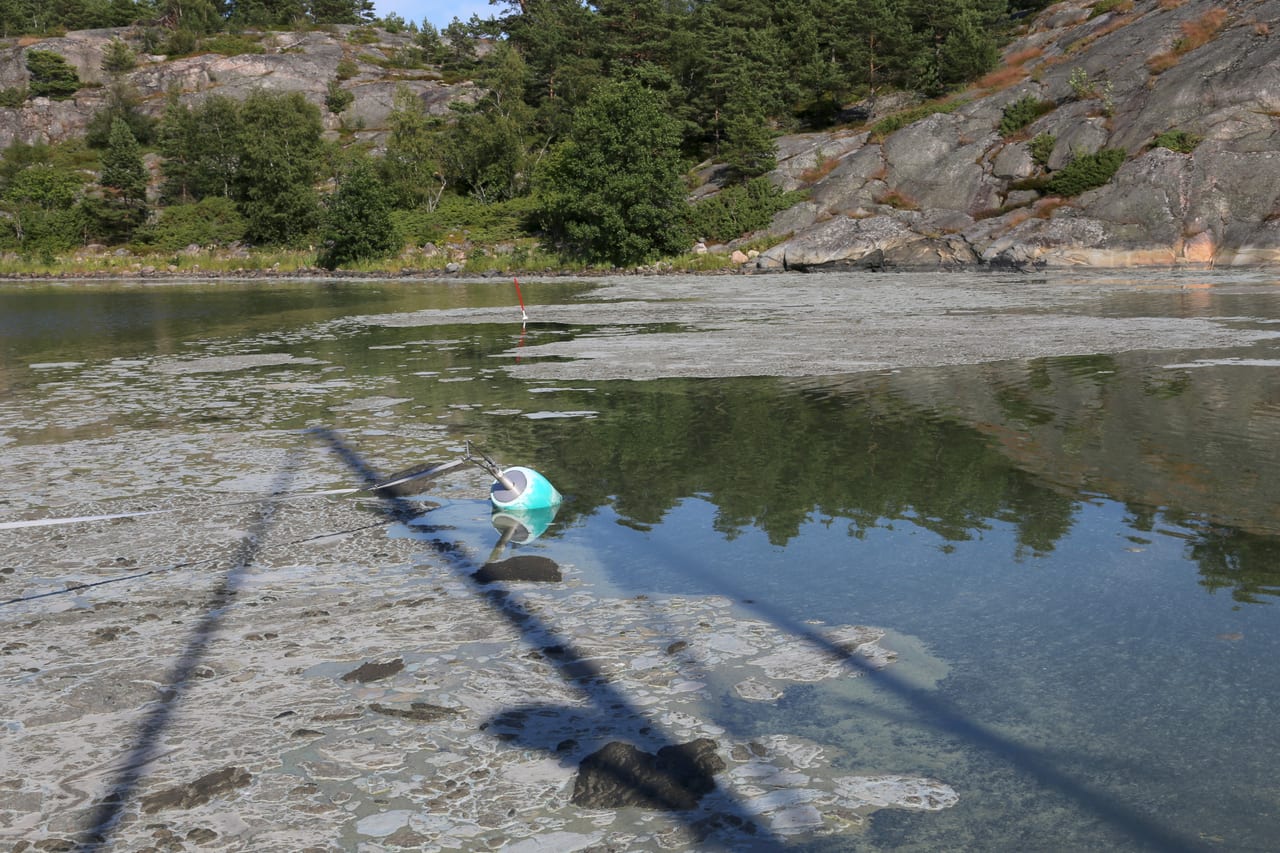
The Norwegian Environment Agency (in Norwegian) has established that nitrogen from sewage and agriculture accounts for around 75 percent of the nitrogen flowing into the Oslofjord. The nitrogen drives the growth of filamentous algae, often called lurv, which can take over from kelp forest, eelgrass meadows and other important habitats for fish and small animals. In recent years there have been reports of more lurv across the fjord, a sharp decline in sugar kelp, reduced extent of oarweed, and weakening in 67 percent of the eelgrass meadows.
.jpg)
Newer modelling from 2026 points the same way: high nitrogen concentrations give more lurv, harder conditions for eelgrass, wrack and kelp, and poorer seabed conditions. To improve the state, the modelling shows that nitrate concentrations must be reduced by 30-40 percent for large parts of the Oslofjord to reach good status for several nitrogen indicators.
This is not a narrow environmental topic. It is a sign that the ecosystem itself is out of balance.
The government has therefore introduced no-fishing zones and several fisheries measures in the Oslofjord to strengthen the fish stocks and give the ecosystem a better chance to recover. From 1 January 2026, three large no-fishing zones apply in the inner fjord and around the national parks at Færder and Ytre Hvaler.
When measures like this are needed, it is a signal that the sea can no longer be treated as an endless resource.
The problem does not stop at Norway
What is happening here at home is part of a larger picture.
OSPAR’s Quality Status Report for the North-East Atlantic shows that loss of biological diversity, habitat degradation, pollution, climate change and ocean acidification still affect our seas. The report points to a growing need to tackle the drivers behind nature loss and to build more robust marine ecosystems.
The IPCC also describes rising risk for coastal ecosystems. For sensitive ecosystems such as eelgrass meadows and kelp forest, the risk increases sharply as warming rises, especially in combination with other pressures such as marine heatwaves, acidification, oxygen loss and local pollution.
That makes the matter both larger and closer to home.
We cannot solve everything. But we can stop pretending the problem is far away.
Restoration is not romance. It is work.
Nature restoration often sounds beautiful. In practice it is demanding.
Good intentions are not enough. A measure has to fit the place, the species, the water quality, the permits, the currents, the ecology and the people who will live with it. It has to be measured. It has to be followed up. It has to withstand nature not always answering the way we hope.
The Institute of Marine Research, the Directorate of Fisheries and the Norwegian Environment Agency are now working on the knowledge base for a national plan for restoring kelp forest in Norway. In June 2026 the Institute of Marine Research (in Norwegian) describes a new report in progress, with possible measures and options for systematic restoration of Norwegian kelp forest.
That matters.
Because restoring the sea has to move out of symbolism and into expertise, governance and long-term delivery.
Where Terralgea comes in
Terralgea was built on a simple idea of a clean, Nordic supplement: one ingredient, Nordic origin, full traceability.
Pure Ulva is cultivated sea lettuce, not harvested from wild stocks. We work with one species, one supply chain and documentation that can be verified from sea to capsule. Terralgea describes its starting point as the opposite of much of the supplement industry: fewer words, more documentation, batch by batch.
But when you build a business on the sea, talking about quality is not enough. You also have to ask a bigger question:
Can we give the sea back more than we take?
Terralgea Restore is our attempt to work on that question in practice. Not as a campaign. Not as a coat of varnish on the product. But as its own marine project, with its own leadership, its own funding and a different purpose than Pure Ulva.
Terralgea Pure Ulva is the crop we cultivate and bring in. Terralgea Restore is about taking part in an enormous, shared responsibility.
Why algae?
Algae are part of the problem when the system is out of balance. But they can also be part of the solution when they are cultivated, managed and used correctly.
Lurv, which grows from high nutrient loads, is a symptom of imbalance. Cultivated macroalgae are something else. They can take up dissolved nutrients as they grow and bind them in biomass. Nordic SeaFarm describes exactly this: cultivating wrack and kelp requires no fertiliser, but has a net uptake of dissolved nutrients, and can therefore help counteract eutrophication (also known as over-enrichment, when lakes, rivers or coastal areas receive too many nutrients, especially nitrogen and phosphorus).
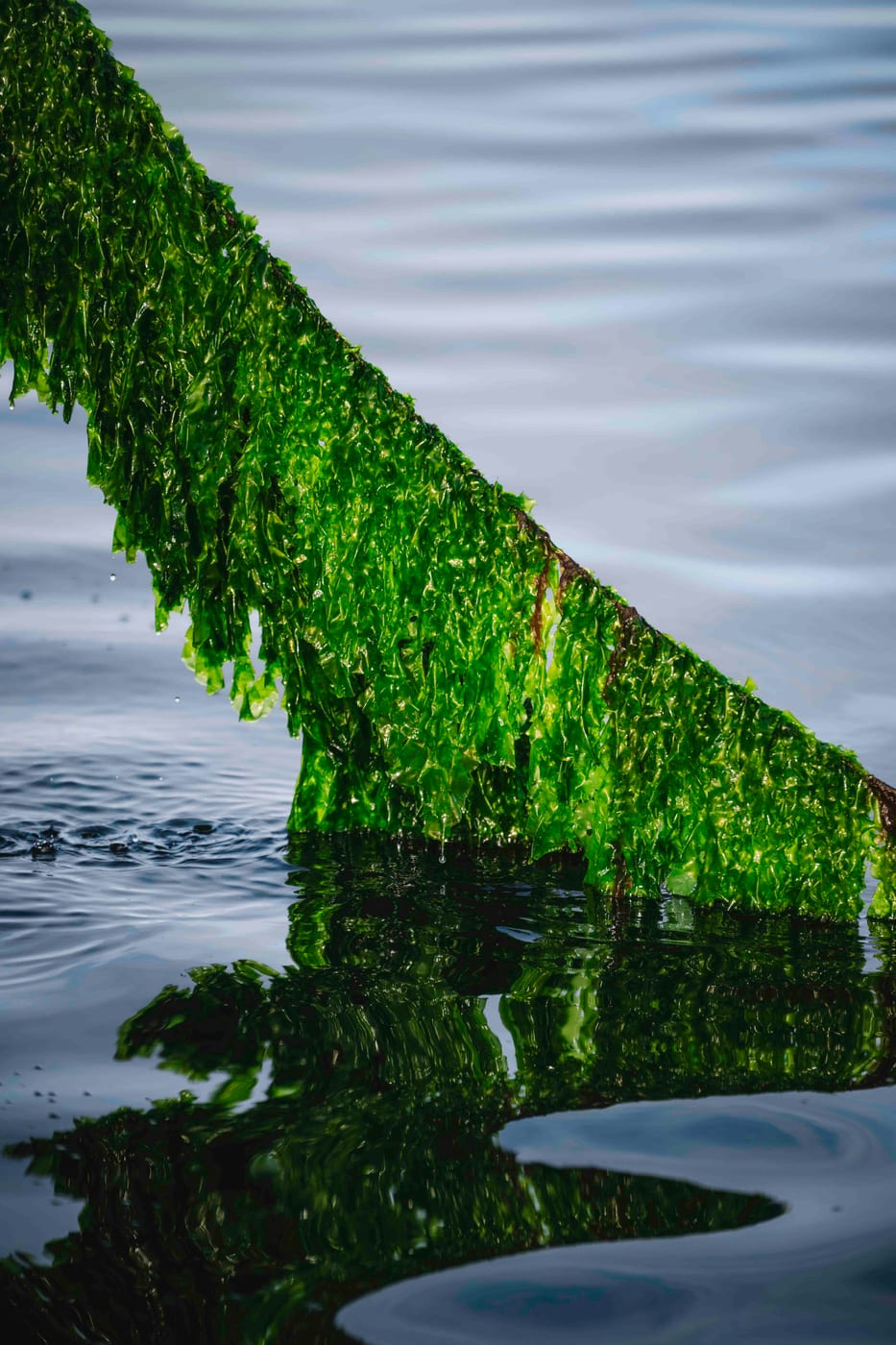
Research on Ulva fenestrata also shows why the species is interesting. Studies from Swedish research groups have documented that Scandinavian Ulva fenestrata has potential for large-scale cultivation at sea, and that it could be suitable as a future raw material in a more sustainable blue economy.
In a study published in Frontiers in Marine Science, researchers showed that Ulva fenestrata cultivated in nutrient-rich process water from herring production gave four to six times higher biomass yield and almost three times higher protein content than Ulva grown in ordinary seawater. The point here is not that this transfers directly to a fjord. The point is that Ulva can convert nutrients into biomass efficiently under the right, controlled conditions.
That is exactly why we have to test, measure and learn.
The method has to be simple enough to scale
One of the methods Terralgea Restore is looking at is inspired by what is known internationally as green gravel.
The principle is simple: algae spores are fixed to small stones, grown under controlled conditions and then placed out at sea. In a study published in Scientific Reports in 2020, the method was tested for sugar kelp in southern Norway. Small stones were seeded with kelp, grown into young plants and placed out in the field. The researchers reported good survival and growth over nine months, even when the stones were dropped from the surface, and pointed to the method as simpler, cheaper and more scalable than several traditional restoration methods.
But this is important: green gravel is not a shortcut around the complexity of nature.
The study is about kelp, not about putting any algae anywhere. The researchers also stress that restoration should be combined with other measures, such as better water quality, reduced pressure, and protection or regulation where it is needed.
For Terralgea, that means a pilot has to be controlled. The right species. The right place. The right permits. The right monitoring. The right partners.
We will not promise more than we can document.
A small start can still be the right one
Terralgea Restore is at an early stage.
Right now it is about dialogue, feasibility studies, expert assessments, authorities, municipalities and the framework for a controlled pilot. We know one company cannot repair the sea alone. We will not pretend otherwise.
But we believe responsibility has to begin where the competence is. We can cultivate Ulva. We can document the raw material. We can work with traceability, quality and Nordic production. We have a production partner with experience from large-scale algae production. We have a product that comes from the sea. So it is natural to ask how the same knowledge can be used in the opposite direction.
From extraction to return. From raw material to restoration. From product to responsibility.
Siv leads the work
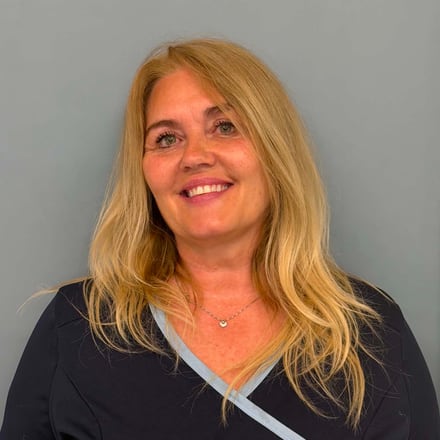
Terralgea Restore is led by Siv Langøy. She came into the project as a professional, asked the questions we needed to hear, and over time became part of the work. Here is Siv in her own words:
Some of the biggest projects start with an ordinary conversation.
In the spring of 2026 I gave a talk on fascia at Tunsbergdagene in Drammen. Afterwards I got talking with the people behind Terralgea. The conversation was originally about their product, Pure Ulva, made from Ulva fenestrata, pure and with nothing added, and especially about the naturally occurring vitamin B12 in the algae.
As a professional with an interest in nutrition, health and biological systems, I became curious. How could an alga hold so many interesting nutrients? Where did it come from? How was it grown? My curiosity took me on to Grebbestad, where I got to visit Nordic SeaFarm and see the cultivation with my own eyes. There I gained insight into how sea lettuce is grown at scale, and what role macroalgae can play in a more sustainable society.
During the visit a new question grew: if these algae take up nutrients from the sea as they grow, could they also become part of the solution to the environmental challenges we see in Norwegian fjords?
To understand more, I set up a meeting with marine biologist and researcher Göran Nylund. Through our conversations I gained insight into both the biology of the algae and the possibilities for nature-based measures at sea. What began as a conversation about a supplement gradually grew into the idea of Restore: a project about how knowledge, research and innovation can contribute to healthier fjords and more robust marine ecosystems.
The journey led on to meetings with representatives from the Norwegian Ministry of Climate and Environment. The response has been positive, and the interest in new nature-based solutions is strong.
For me, Restore is about something fundamental: to see possibilities where others see challenges, and to connect people with different expertise. Helping to give more back to the sea that gives us so much is a matter of course.
Siv Langøy, CEO of Terralgea
Will you help?
We are looking for partners who want to help build this right from the start. Municipalities. Research groups. Foundations. Businesses. Coastal communities. Investors. People who understand that the sea does not need more big words, but more precise measures.
Terralgea Restore is not a promise that everything can be solved with algae. It is a concrete attempt to do something where we actually have knowledge, raw material, network and responsibility.
The sea has given us more than we can measure. The question now is what we can give back.
Get in touch with Siv Langøy, CEO of Terralgea and contact for Terralgea Restore:
siv@terralgea.no · +47 45 50 51 32
Further reading
Norway:
- Institute of Marine Research: Restoring kelp forests in Norway (2025, in Norwegian)
- Institute of Marine Research: Kelp forest as habitat (in Norwegian)
- NIVA: Norwegian coastal waters under pressure (2021, in Norwegian)
- Norwegian Environment Agency: The Oslofjord in serious trouble (2025, in Norwegian)
International: