
Terralgea Restore
On the ocean’s
terms.
We develop projects for healthier water and bring together the expertise, technology and delivery each site needs.
The starting point
Nature does not always repair itself.
Once kelp forest is lost, it does not easily return, even when conditions improve. Reversing the trend is urgent.
In 2024 the Norwegian Parliament asked the government for a plan to restore kelp forest along the coast. In 2025 Norway’s Minister of Climate and Environment said that the Oslofjord is in a serious environmental crisis.
30–40 %
5,000 km²
1–2 °C
2030
Why Restore
Undoing decades of pressure on nature takes a joint effort. No single organisation or technology can do it alone. Restore puts together solutions across technologies and suppliers, working with specialists. We believe this gives faster results than stand-alone measures.
01 / Restore
Effective measures begin with local understanding.
Currents, oxygen and life on the seabed. Conditions vary. The approach should too.
An environmental measure at sea calls for biology, water chemistry, technology, permits, budget and monitoring at the same time. Restore develops the project and brings together what you need, so you deal with one project and one plan.
We do not own all the technology we use. We choose what suits the site, together with specialists and suppliers.
Who we work for
Aquaculture companies
- Better water quality at and around the farm
- Better use of nutrients and resources
- A defined measure that can be tested and measured
Municipalities, ports and project owners
- A local environmental measure in a fjord, bay or harbour
- A project to be planned, funded and followed up
- A complete basis for funding applications and decisions
02 / Potential measures
Many tools.
One solution.
The measures below are examples, not a menu. As in a construction project, we bring together the specialists, technology and subcontractors each site needs, and hold the whole together. The need decides what is chosen, and the effect has to be shown at each site.
Examples of measures
01Nutrients
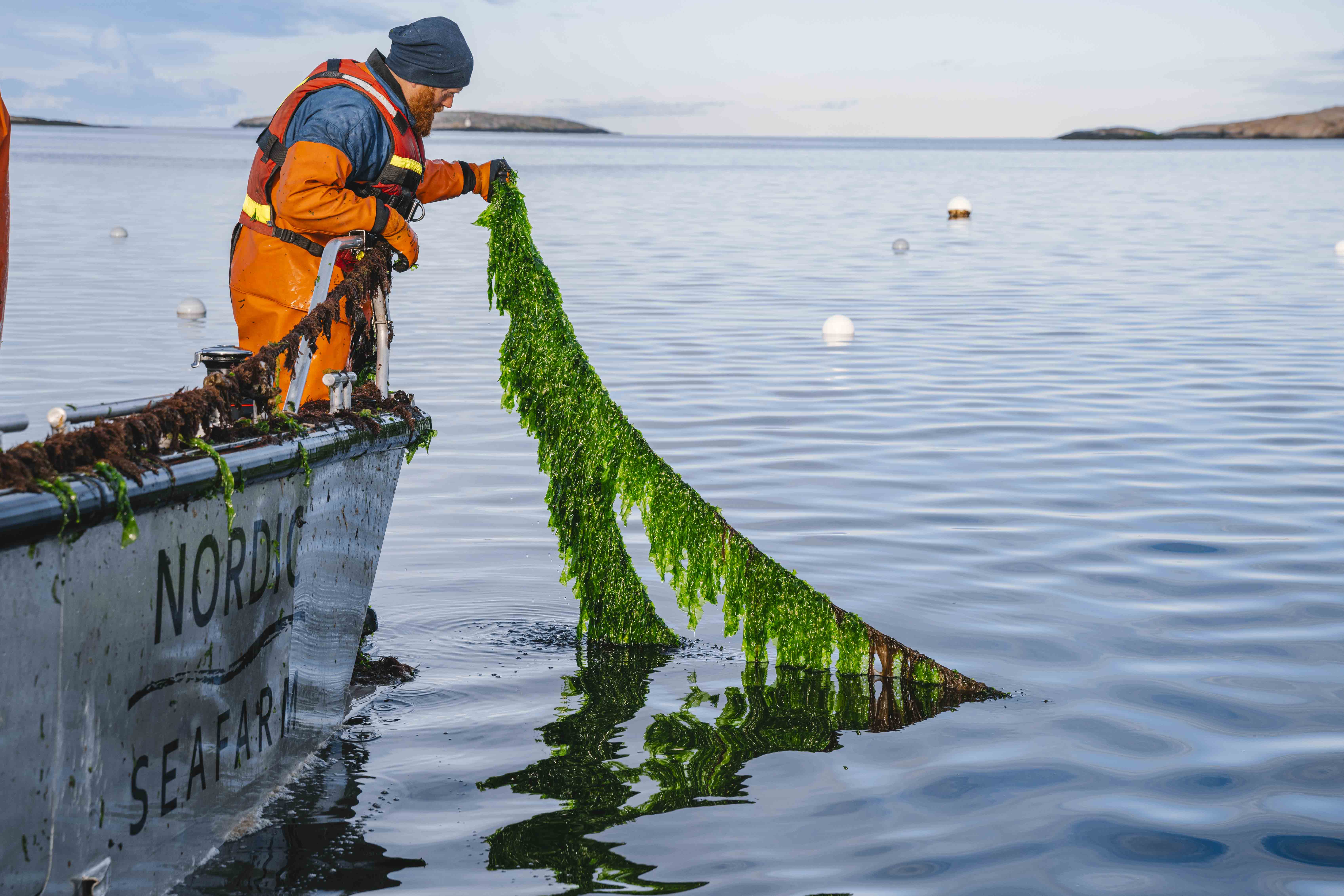
Ulva cultivation
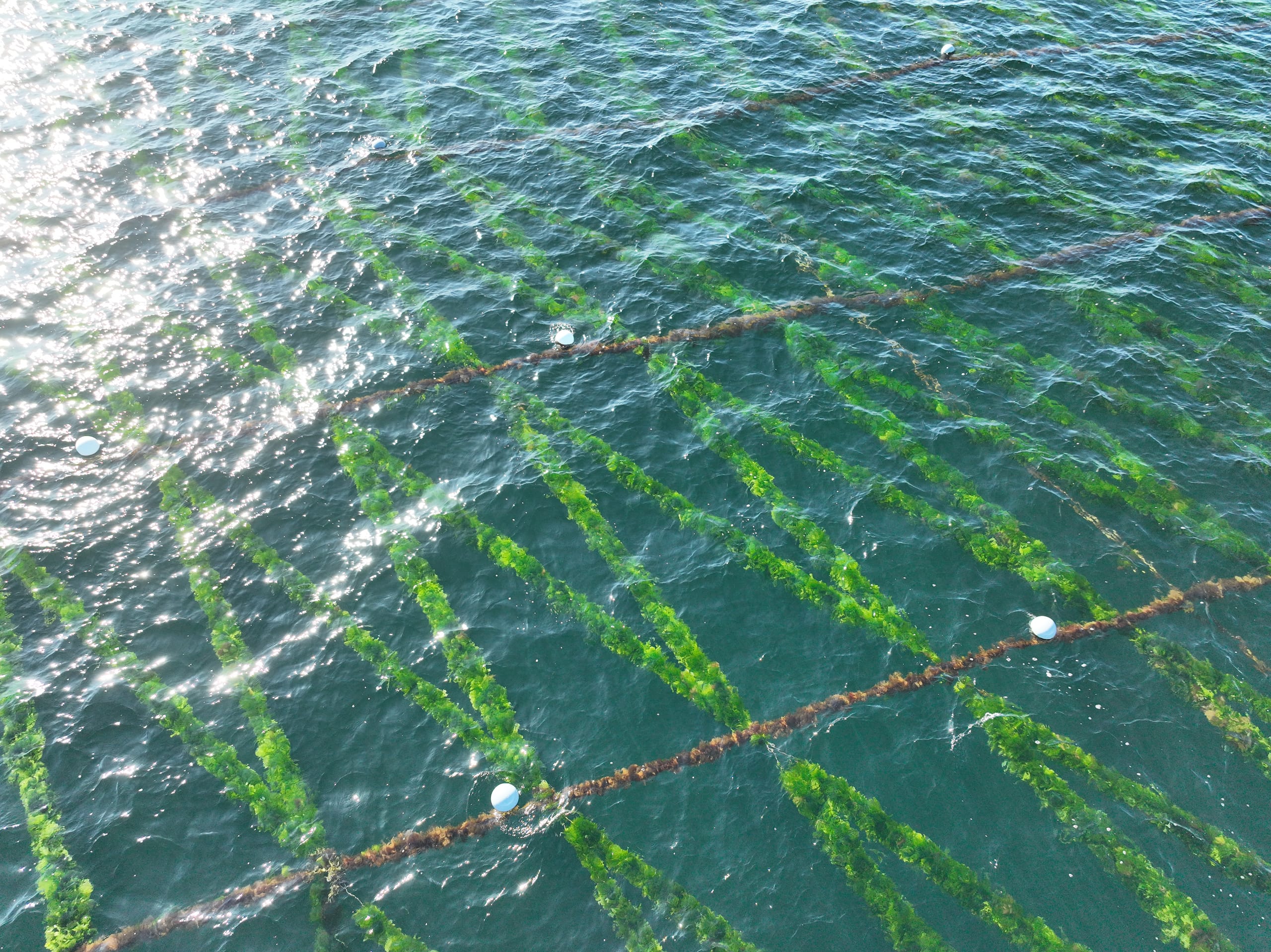
Sea lettuce absorbs nutrients as it grows. We are exploring cultivation near fish farms, adapted to the conditions at each site.
02Oxygen
Nanobubble technology
Where oxygen levels are low, we assess nanobubble oxygenation with technology suppliers. Suitability, operation and impact need to be established for each site.
03Seabed
Biological measures
Where organic material accumulates, we assess biological measures with relevant specialists. Seabed conditions and local knowledge inform the next step.
04Other measures
As needed
Habitat measures, marine vegetation, other water treatment and monitoring programmes are assessed when the site calls for them. We bring in the specialists, suppliers and contractors who can deliver them.
The team around each project
We bring together the specialists and suppliers each project needs: marine biologists and ecologists, water chemistry and analysis, technology, contractors and local operators.
03 / First step
Start with
a feasibility study.
The first thing you can order is a defined site survey or feasibility study. It gives you a basis for deciding whether, how and where a measure should be carried out.
What we examine
- The condition of the water
- The pressure on it and where it comes from
- Biological conditions
- Relevant measures and suppliers
- Which permits are needed
What you receive
- A recommended measure
- A monitoring plan and budget
- Division of responsibilities and a plan for next steps
The recommendation may also be to change or stop the project.
You buy a better basis for decisions, not a predetermined conclusion.
04 / How we work
One phase at a time.
Each phase gives you a result and a basis for deciding whether to order the next.
- 01
Survey and feasibility study
A basis for decisions, with a recommendation.
Continues once you have chosen a measure.
- 02
Project development
Project plan, partners, budget and a basis for funding applications. Permits, agreements and monitoring plan are clarified.
Continues once funding and permits are in place.
- 03
Defined measure
The measure is installed and tested within the agreed scope.
Continues once the results have been assessed.
- 04
Follow-up and monitoring
Monitoring data, service and reporting over time.
Continues with a new need or a new site.
Monitoring
Before a measure starts, we measure the baseline and agree on what will be monitored. Effect, cost and any unwanted side effects are assessed before the measure is continued, changed or ended.
A conversation is a good place to start
Let’s look at
your site.
We are happy to talk with aquaculture companies, fish farmers, municipalities and other project owners. Tell us about the site, and we will look at the need and a possible first step together.
Talk to Siv